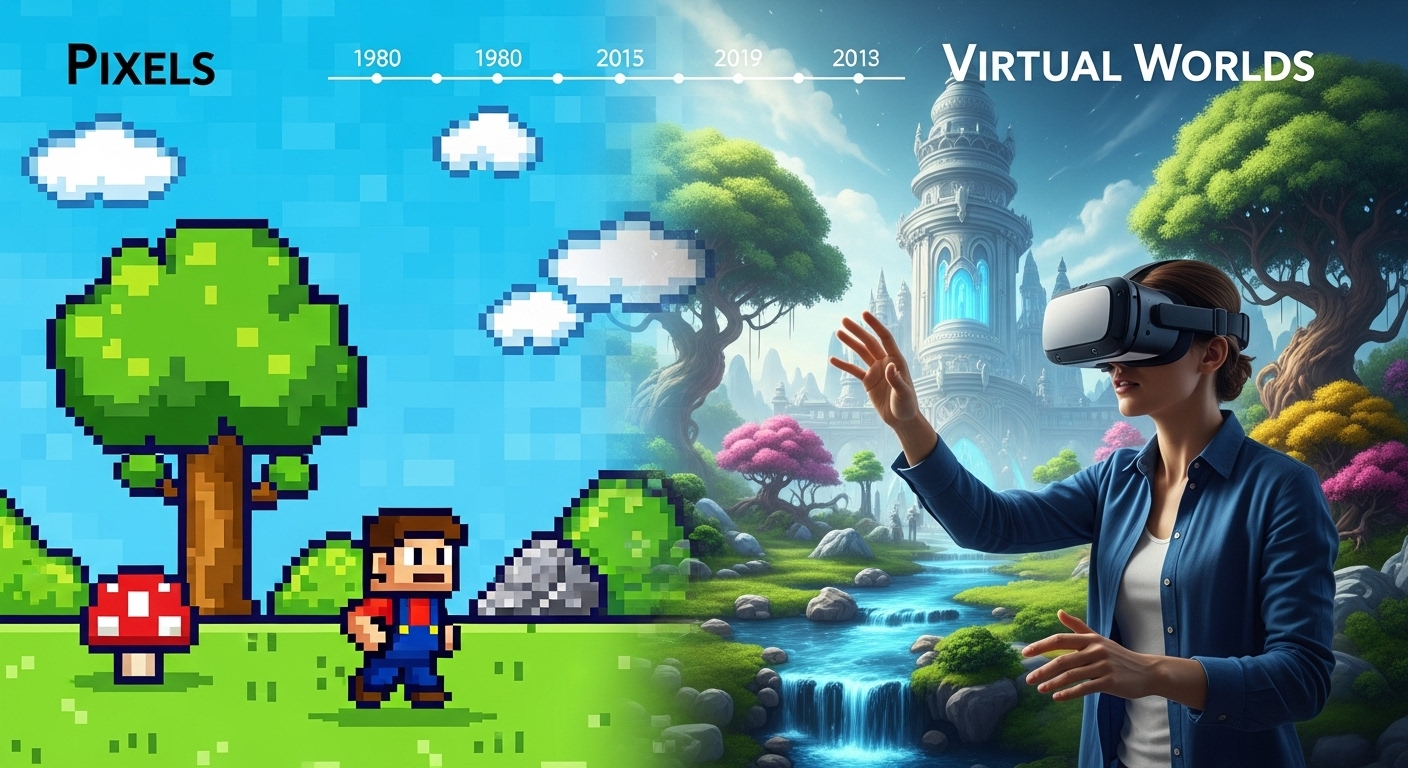
Gaming has become more than a pastime; it is now an art form, a sport, and a multi-billion-dollar industry shaping the way people connect, compete, and create. Over the past few decades, gaming has transformed from simple two-dimensional experiences into vast, hyper-realistic universes that rival the scale of Hollywood blockbusters. Whether you are a casual mobile player or a dedicated esports competitor, gaming has a way of capturing imagination and emotion unlike anything else. This evolution tells a story not just of technology, but of creativity, community, and the human desire to explore.
The Birth of Gaming and Its Humble Beginnings
The journey of gaming began in the simplest of ways. In the early days of computers, games were designed primarily by engineers and hobbyists experimenting with what machines could do. The first true video games, such as Pong, Spacewar!, and later Pac-Man, introduced the concept of interactivity to entertainment. These early creations were revolutionary because they allowed players to control outcomes rather than passively watch them.
At that time, no one imagined that gaming would one day rival cinema and music in cultural and financial impact. Yet, even those early games laid the groundwork for what was to come. Arcades became gathering spots for young players, and home consoles brought the experience into living rooms around the world. Games like Super Mario Bros., The Legend of Zelda, and Sonic the Hedgehog defined an era, creating icons that remain relevant even today. The limitations of technology forced developers to rely on creativity, and that is why so many early titles still feel magical.
The Rise of Consoles and the Birth of a New Generation
As the 1990s approached, gaming began to evolve rapidly. The arrival of consoles like the Super Nintendo, Sega Genesis, and later the PlayStation changed the way games were made and played. For the first time, games began to tell real stories. Titles such as Final Fantasy, Metal Gear Solid, and Resident Evil introduced cinematic storytelling, deep characters, and complex worlds. Gamers no longer just played for points; they played for emotional connection and immersive adventures.
With the emergence of 3D graphics in the mid-1990s, games became more lifelike. The leap from two-dimensional side-scrolling adventures to full three-dimensional environments changed everything. Developers now had the power to build entire worlds that players could explore freely. Games like Super Mario 64 and The Legend of Zelda: Ocarina of Time showcased what was possible, setting standards that continue to influence game design.
The Online Revolution: Connecting Players Across the Globe
Perhaps the most transformative change in gaming came with the rise of the internet. Suddenly, games were no longer solitary or limited to local multiplayer modes. The idea of connecting with people from different parts of the world through a shared virtual space became a reality. Online multiplayer games such as Counter-Strike, EverQuest, and later World of Warcraft introduced the concept of online communities and digital identities.
This era marked the beginning of gaming as a social experience. Players joined clans, guilds, and teams, forming friendships that often extended beyond the screen. The sense of belonging and teamwork that online games created was powerful. For many, gaming became a place of escape, self-expression, and community. The rise of broadband internet in the early 2000s only accelerated this trend, paving the way for the online-dominated gaming landscape we know today.
The Growth of PC Gaming and the Modding Culture
While consoles brought gaming to the mainstream, PC gaming became a hub for experimentation and innovation. With better hardware and open platforms, players on PCs could push the limits of what games could do. Titles like Half-Life, Doom, and StarCraft became legendary not only for their gameplay but for their communities. Modding — the act of altering or adding to a game’s content — became an essential part of PC gaming culture.
Mods gave rise to entire new genres. For example, the popular multiplayer online battle arena (MOBA) genre originated as a modification of a real-time strategy game. Similarly, some of today’s biggest hits trace their roots back to fan-made content. This collaborative relationship between players and developers continues to define the PC gaming world, where creativity often flourishes in unexpected ways.
The Dawn of Esports: From Hobby to Professional Competition
What was once seen as a casual hobby has now become a professional sport. Esports, or competitive gaming, emerged from small community tournaments into global events filling entire stadiums. Players train, strategize, and compete with the same intensity as traditional athletes. Games like League of Legends, Dota 2, and Counter-Strike: Global Offensive have created ecosystems where professional teams, sponsorships, and international competitions thrive.
The growth of esports also brought legitimacy to gaming as a career path. Streamers and professional gamers now earn incomes that rival or surpass traditional athletes. Millions of viewers tune in to watch their favorite players on platforms that broadcast matches live, complete with commentators and elaborate productions. This shift represents how gaming has matured — from simple recreation to a cultural and economic powerhouse.
The Role of Streaming and Content Creation
Streaming has redefined what it means to play and share games. Platforms that allow players to broadcast their gameplay to audiences around the world have transformed gaming into both a social and performative experience. Players are no longer just participants; they are entertainers, commentators, and community leaders.
This rise of gaming influencers has changed the way games are marketed and consumed. A single streamer can introduce millions of viewers to a new title, creating viral success overnight. The relationship between player and audience has blurred the line between creator and consumer. People watch games as much as they play them, and this shared experience strengthens the bond within the gaming community.
The Emergence of Mobile Gaming: Accessibility and Expansion
While console and PC gaming continued to evolve, mobile gaming quietly became one of the most influential forces in the industry. With smartphones becoming nearly universal, mobile gaming brought interactive entertainment to a massive audience that might never have owned a console or gaming computer. Simple yet addictive titles reached millions of players around the globe, proving that gaming didn’t have to be confined to expensive hardware.
Mobile gaming also introduced new business models, such as free-to-play games supported by microtransactions. Though sometimes controversial, these models made games accessible to more people while giving developers new ways to sustain their creations. Moreover, mobile gaming bridged generations — parents, children, and even grandparents found themselves playing games on their phones, making gaming a truly universal form of entertainment.
The Art and Science of Game Design
Behind every great game lies a careful balance of art, technology, and psychology. Game design is not just about creating challenges or pretty visuals; it is about crafting experiences that resonate emotionally. Developers must think deeply about player motivation, engagement, and reward systems. Whether it’s the satisfaction of solving a puzzle, the thrill of competition, or the joy of exploration, every element is carefully designed to keep players connected to the world they inhabit.
Sound design, storytelling, and visual style all play crucial roles. A great soundtrack can make an ordinary moment feel epic. Subtle visual cues can guide players without them realizing it. The best games use these elements not as separate parts but as a unified language of interaction. In this way, games have become one of the most powerful storytelling mediums of our time.
The Rise of Narrative and Emotional Storytelling
In recent years, games have proven that they can tell stories as deep and meaningful as any book or film. Titles like The Last of Us, Red Dead Redemption 2, and Life is Strange explore complex themes such as love, loss, morality, and survival. Players do not just watch these stories unfold; they live them, making choices that can alter outcomes and deepen emotional connection.
This interactive storytelling gives games a unique advantage. Unlike films, where the audience observes passively, games place players inside the story. Every decision carries weight, and that agency creates a level of immersion that other media can rarely match. This is why gaming has become a preferred medium for those seeking both entertainment and emotional engagement.
Technological Advancements and the Future of Realism
Every new generation of gaming technology brings us closer to realism. High-definition graphics, ray tracing, advanced physics engines, and motion capture have blurred the line between real and digital worlds. The attention to detail in modern games is astounding, from lifelike facial expressions to weather systems that respond dynamically to the environment.
Virtual reality (VR) and augmented reality (AR) have taken this immersion even further. VR allows players to step directly into a game world, while AR integrates digital elements into the real world. These technologies redefine how people experience games, making them more physical and interactive. As hardware improves, the boundaries between game and reality continue to fade.
The Expanding Role of Artificial Intelligence in Games
Artificial intelligence has always been a part of gaming, from simple enemy behaviors in early games to advanced adaptive systems in modern ones. But AI now plays a much larger role, shaping everything from game design to player experience. Enemies can now learn from player actions, adapt strategies, and offer more dynamic challenges. Procedural generation uses AI to create vast worlds that feel hand-crafted, offering nearly infinite variety.
AI is also changing how games are made. Developers use machine learning to test gameplay balance, generate dialogue, and even compose music. In the near future, AI may allow games to respond uniquely to every player, creating truly personalized experiences that evolve in real time.
Gaming as a Cultural and Social Force
Gaming is no longer a niche hobby. It has become one of the defining cultural phenomena of the 21st century. From esports tournaments broadcast globally to video game soundtracks performed by orchestras, gaming has entered mainstream consciousness. It influences fashion, music, film, and even education.
Games have also become powerful tools for connection and empathy. Online worlds allow people from different backgrounds to interact, collaborate, and understand each other in ways that traditional social spaces cannot. During times of crisis or isolation, gaming communities often serve as vital social lifelines, offering companionship and shared purpose.
The Challenges and Controversies of Modern Gaming
Despite its growth, gaming faces challenges. Issues such as toxicity in online communities, addiction concerns, and exploitative monetization models have sparked debates. Developers and platforms are constantly seeking ways to make gaming more inclusive and responsible. Discussions around representation, accessibility, and mental health are reshaping the industry’s future.
However, these challenges also push the medium to mature. The conversations happening today reflect how deeply gaming has integrated into modern life. As the industry learns from its missteps, it continues to move toward a more ethical and inclusive future.
The Indie Revolution: Creativity Beyond Boundaries
While big studios dominate headlines, independent developers have become some of the most important voices in gaming. Freed from corporate constraints, indie creators experiment with art styles, gameplay mechanics, and storytelling approaches that redefine what games can be. Titles like Celeste, Hades, and Undertale prove that emotional depth and creativity can shine even without massive budgets.
The rise of digital distribution platforms has given indie games global reach. Players now have more choices than ever, leading to a vibrant and diverse gaming landscape. Indie developers remind the world that innovation often comes from passion rather than profit.
The Future of Gaming: A Boundless Horizon
Looking ahead, the future of gaming feels limitless. Technologies like cloud gaming promise to eliminate hardware barriers, allowing anyone with an internet connection to play high-quality games instantly. Cross-platform play continues to unite players regardless of device. Advances in haptic feedback and sensory technology could soon make virtual experiences indistinguishable from reality.
Gaming will also continue to expand into education, therapy, and art. It will teach, heal, and inspire. The next generation of gamers will not just play games; they will create them, shaping the next frontier of interactive storytelling.
Conclusion: The Infinite Game of Imagination
From pixelated beginnings to breathtaking virtual worlds, gaming has come a long way. It has evolved into a medium that combines art, technology, and human emotion in ways that no other form of entertainment can. It connects people, tells stories, and challenges imagination. Every new generation of players and developers carries the torch forward, exploring what’s possible when creativity meets interaction.
Gaming is not just about competition or escape; it is about experience, connection, and creation. It continues to grow because it speaks to something timeless — our desire to explore, to challenge ourselves, and to play. As technology advances and new ideas emerge, one thing remains certain: the world of gaming will keep evolving, always finding new ways to inspire and unite people across the planet.